
pigmentation treatment
Pigmentation Treatment
Pigmentation Treatment in Dubai

Uneven skin tone, dark spots, and hyperpigmentation patches are among the most common aesthetic concerns at clinics across Dubai and with the region’s year-round intense UV environment, hormonally diverse patient population, and wide range of skin phototypes, treating these conditions effectively and safely demands more than a single technology and a standard protocol.
At Dr. Namshi’s Aesthetic Medicine & Dentistry, pigmentation treatment is built on a precise clinical understanding of what is driving each patient’s discolouration, how deep it lies, and how their specific skin type will respond to intervention. The result is a programme that is targeted, safe, and genuinely results-driven rather than a generic course of laser sessions applied uniformly to every patient who walks in.
Make Appointment
How Skin Pigmentation Develops
Skin colour is produced by melanin a pigment synthesised by melanocytes, specialised cells located at the dermal-epidermal junction. In a well-regulated skin system, melanin production is consistent and evenly distributed. Pigmentation disorders occur when this regulation breaks down triggered by UV radiation, hormonal shifts, inflammation, or genetic predisposition causing localised overproduction of melanin that results in patches, spots, or diffuse discolouration darker than the surrounding skin.
The clinical depth of pigmentation is one of the most important determinants of treatment selection. Epidermal pigmentation contained within the upper skin layers responds well to topical agents, chemical peels, and most laser systems. Dermal pigmentation deposited in the deeper dermis requires longer-wavelength lasers or more intensive protocols, and carries a greater risk of post-treatment hyperpigmentation if managed without sufficient care. Mixed-depth pigmentation, such as many melasma presentations, requires a carefully sequenced multi-modal approach.
Types of Pigmentation We Treat
Melasma
Melasma is a chronic hyperpigmentation condition presenting as bilateral, symmetrical patches of brown to grey-brown discolouration most commonly on the cheeks, forehead, upper lip, and chin. It is strongly hormonally driven, predominantly affecting women, and significantly worsened by UV exposure. Melasma is typically a mixed epidermal-dermal condition, making it one of the most complex pigmentation presentations to manage. At Dr. Namshi’s Aesthetic Medicine & Dentistry, melasma is treated with a multi-modal, long-term strategy: prescription topical depigmenting agents as the maintenance foundation, combined with carefully selected in-clinic procedures at appropriate intervals. We do not over-treat melasma with aggressive lasers overstimulation of melanocytes in sensitive skin is a known cause of rebound darkening and worsening.
Post-Inflammatory Hyperpigmentation (PIH)
PIH is the discolouration that develops following any inflammatory event in the skin acne lesions, eczema, insect bites, cuts, or treatment-related inflammation. It is particularly prevalent in Fitzpatrick skin types III–VI, which represent a significant proportion of Dubai’s population. Epidermal PIH fades over time with diligent sun protection and appropriate topical management; dermal PIH persists for much longer and requires active intervention. Our treatment approach for PIH is selected based on the depth, age, and skin type of the presenting lesion.
Solar Lentigines and Sun Damage
Solar lentigines commonly called age spots or sun spots are discrete, flat, sharply defined areas of brown pigmentation caused by cumulative UV exposure. They appear most frequently on the face, hands, forearms, and décolletage. They are typically epidermal in depth and among the most treatment-responsive forms of pigmentation often clearing significantly after a single well-calibrated laser or IPL session. Diffuse photodamage the generalised mottled discolouration, roughness, and uneven tone that results from years of sun exposure responds well to a combination of chemical peels and laser resurfacing.
Freckles and Genetic Pigmentation
Freckles are genetically determined epidermal melanin concentrations triggered and darkened by UV exposure. They are predominantly an epidermal concern and respond very well to laser treatment and structured sun protection programmes. Patients who wish to lighten rather than completely eliminate freckles preserving natural character while improving tone evenness can achieve beautifully balanced outcomes with carefully calibrated treatment energy levels.
Pigmentation Treatment Options at Dr. Namshi’s Aesthetic Medicine & Dentistry
Laser and IPL Treatments
Laser therapy is one of the most targeted tools available for pigmentation management. Q-switched Nd:YAG lasers deliver short, high-energy pulses absorbed selectively by melanin granules shattering them into smaller fragments that are cleared by the immune system. Fractional laser treatments simultaneously address pigmentation, surface texture, and overall skin tone. IPL (Intense Pulsed Light) is used for diffuse photodamage and multiple solar lentigines across large areas. Technology selection is always guided by the type of pigmentation, the depth of the lesion, and the patient’s skin phototype particularly important in darker skin tones where incorrect wavelength or energy settings can worsen pigmentation rather than improve it.
Medical-Grade Chemical Peels
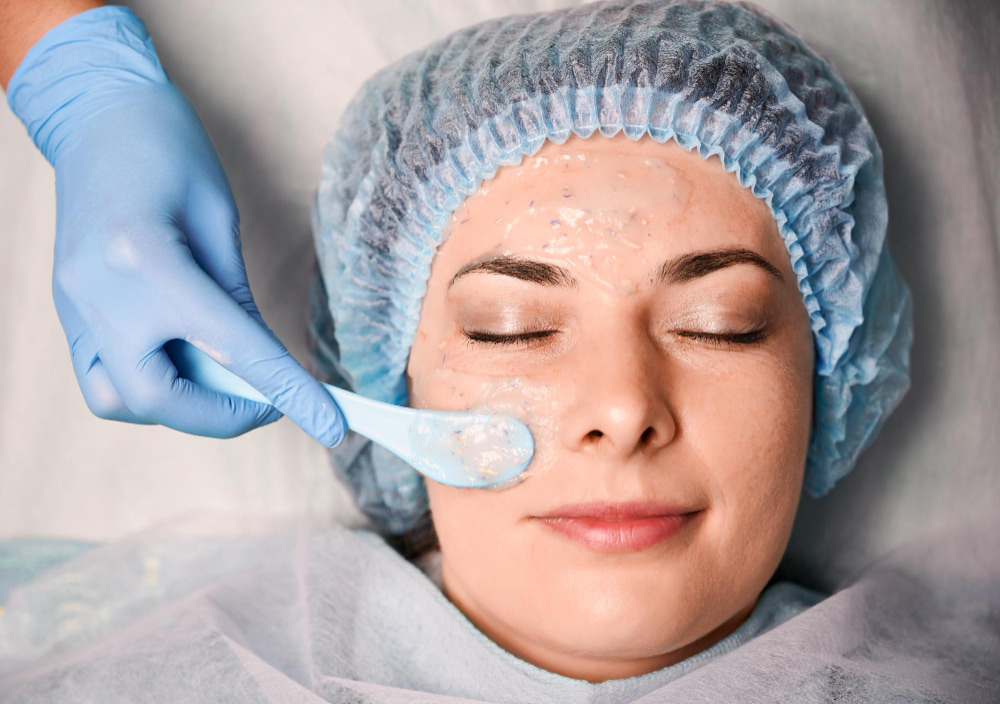
Chemical peels accelerate epidermal cell turnover by applying controlled acid formulations, progressively shedding pigmented superficial layers to reveal clearer skin beneath. We use glycolic acid and lactic acid peels for mild diffuse pigmentation and general radiance; mandelic acid peels specifically suited to darker skin phototypes and PIH due to their larger molecular size and lower post-peel irritation risk; and TCA peels for more significant photodamage and superficial dermal pigmentation. Peel selection, concentration, and depth are individually matched to each patient’s skin type and tolerance.
Microneedling with Depigmenting Serums
Microneedling combined with topical depigmenting agents tranexamic acid, kojic acid, vitamin C, niacinamide, or azelaic acid delivers these actives into the dermis through microchannels at concentrations and depths that topical application on intact skin cannot replicate. This approach is safe across all skin types, including darker complexions where laser modalities carry more significant risk, and is particularly valuable for mixed-depth melasma and post-inflammatory hyperpigmentation management.
Prescription Topical Programmes
Clinical treatments create the conditions for pigmentation improvement prescription topical agents maintain and extend those improvements between sessions and at home. At Dr. Namshi’s Aesthetic Medicine & Dentistry, home-care protocols are not afterthoughts; they are an integral component of every pigmentation treatment plan. We develop personalised regimens that may include prescription-strength hydroquinone (used under appropriate clinical supervision and for defined treatment periods), retinoids, tranexamic acid, azelaic acid, kojic acid, and niacinamide. Regimens are adjusted at each appointment based on skin response.
Sun Protection: The Non-Negotiable Foundation
No pigmentation treatment programme delivers lasting results without rigorous, daily, broad-spectrum sun protection. UV radiation is the primary driver and exacerbator of all melanin-stimulating conditions without consistent SPF 50+ photoprotection, treated pigmentation will recur regardless of the quality of clinical intervention. At Dr. Namshi’s Aesthetic Medicine & Dentistry, we provide specific sun protection guidance as part of every pigmentation plan, including product recommendations, application frequency, and additional UV-avoidance strategies relevant to Dubai’s environment and lifestyle.
How Many Sessions Are Required?
Treatment requirements vary significantly by pigmentation type, depth, skin phototype, and severity. Solar lentigines may clear in one to three laser sessions. Diffuse photodamage typically benefits from a course of four to six sessions of combined laser and peels. Melasma is a chronic condition requiring long-term management a typical initial programme involves six to eight weeks of topical preparation, followed by periodic in-clinic sessions with ongoing maintenance. We set realistic, honest expectations at consultation and measure progress objectively at each appointment.
Pigmentation Treatment Cost in Dubai
Pricing reflects the modalities used, the number of sessions in the programme, and the complexity of the individual case. We provide complete cost transparency at consultation, and package pricing is available for multi-session treatment courses. Our team will recommend only the treatments that are genuinely indicated for your presentation not the most expensive protocol available.
Book Your Pigmentation Consultation in Dubai
Clearer, more even skin is achievable but it requires the right clinical assessment, the right treatment sequence, and the right ongoing management. Contact Dr. Namshi’s Aesthetic Medicine & Dentistry today to book your pigmentation treatment consultation in Dubai. Let our expert team assess your skin accurately and design a targeted programme that delivers the tone clarity and confidence you are looking for.
Frequently Asked Questions
UV radiation, hormonal shifts, inflammation, and genetic predisposition trigger localised melanin overproduction.
Melasma is a chronic condition requiring long-term management it can be significantly controlled but needs ongoing maintenance.
It requires careful wavelength selection; Q-switched Nd:YAG is preferred for darker phototypes to minimise rebound risk.
Solar lentigines may clear in 1–3 sessions; melasma requires a multi-session programme over several months.
Absolutely daily SPF 50+ is non-negotiable; without it treated pigmentation will recur regardless of treatment quality.